

Why Profit First is not working for many businesses comes down to one thing: strategy.
You’ve read the book. You’ve opened the accounts. You’re trying to follow the system.
So why does it still feel like… nothing has changed?
You’re moving money around. You’re allocating percentages. You’re “doing Profit First.”
But your bank account still feels tight, and your financial stress hasn’t gone away.
If that’s your experience, here’s the truth:
Profit First doesn’t fail implementation does.
And most of the time, it’s not because you’re doing something wrong. It’s because you’re missing the strategy behind the system.
Let’s break down what’s really going on and how to make it work for your business.
What Profit First Is Supposed to Do
At its core, Profit First is a cash management system.
It flips the traditional formula:
Sales – Expenses = Profit
Into:
Sales – Profit = Expenses
The goal is simple:
- Prioritize profit
- Create discipline
- Force smarter spending decisions
For many businesses, this is a powerful shift in small business finance.
But here’s where things start to break down.
Why Profit First Is Not Working for Many Businesses
Profit First gives you a structure but it doesn’t give you clarity.
If you don’t fully understand your numbers, you’re essentially guessing:
- What percentages to use
- How much you can actually afford
- Whether your business model supports those allocations
This leads to frustration because the system feels restrictive instead of helpful.
Example
Let’s say you allocate:
- 5% to profit
- 50% to operating expenses
But your actual cost structure requires 65% just to function.
Now you’re constantly “borrowing” from accounts and the system starts to feel broken.
This isn’t a Profit First issue.
It’s a financial strategy issue.
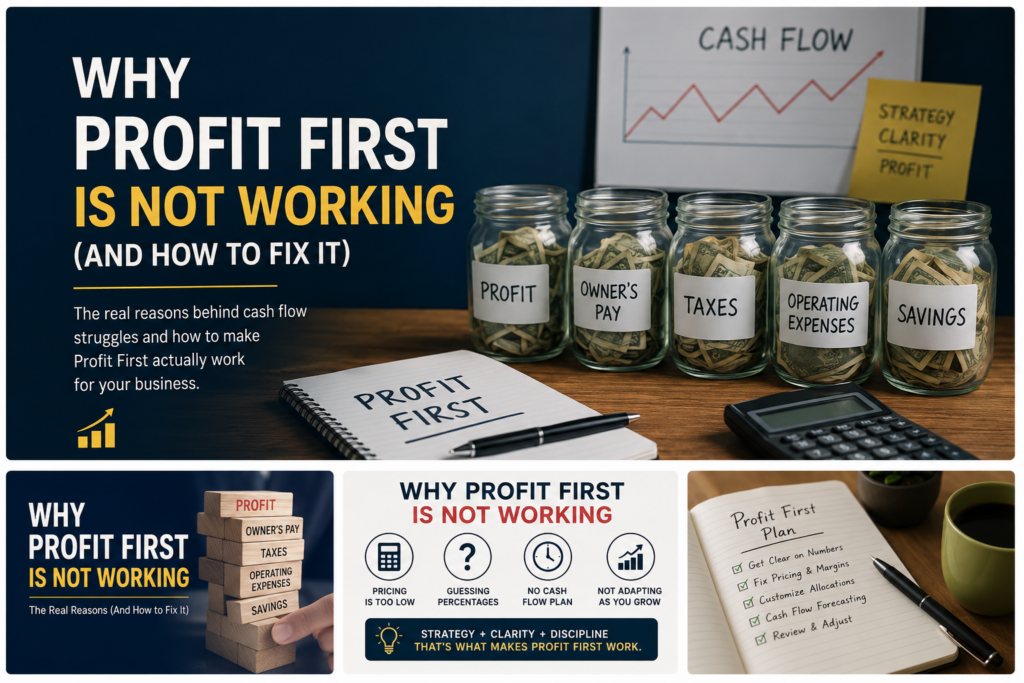
Why Profit First “Doesn’t Work” for Many Businesses
Let’s look at the most common breakdowns.
1. Your Pricing Doesn’t Support Profit
If your pricing is too low, no system will fix it.
Profit First will simply expose the problem faster.
Signs this might be happening:
- You’re always tight on operating expenses
- You keep dipping into profit or tax accounts
- You’re busy but not building reserves
This is one of the most overlooked issues in business growth strategies.
2. Your Percentages Are Based on Guesswork
Many business owners copy percentages from a book or another business.
But your numbers should reflect:
- Your industry
- Your cost structure
- Your stage of growth
Without customization, the system creates pressure instead of clarity.
3. You’re Treating It Like a Shortcut
Profit First is not a quick fix.
It’s a discipline that works best when combined with:
- Accurate financial reporting
- Regular review of numbers
- Intentional decision-making
Without these, it becomes a mechanical exercise instead of a strategic tool.
4. You Don’t Have a Cash Flow Plan
Profit First helps you allocate money but it doesn’t tell you:
- When cash will come in
- When expenses will hit
- How to handle timing gaps
Without proper cash flow management, you’ll still feel stressed even if your accounts are organized.
5. You’re Not Adjusting as You Grow
Your business isn’t static so your allocations shouldn’t be either.
As you grow:
- Costs change
- Margins shift
- Opportunities expand
If your system doesn’t evolve, it will eventually stop working.
The Fix: Turn Profit First Into a Strategy Not Just a System
Profit First works best when it’s part of a bigger financial picture.
Here’s how to make it actually work:
Step 1: Get Clear on Your Numbers
Before adjusting anything, understand:
- Your real operating costs
- Your profit margins
- Your revenue consistency
This is the foundation of strong small business finance.
Step 2: Fix Pricing and Margins First
If your business can’t support profit, no system will fix that.
Focus on:
- Raising prices where needed
- Eliminating low-margin work
- Improving efficiency
This is where practical accounting tips meet real strategy.
Step 3: Customize Your Allocations
Your percentages should reflect reality not theory.
Start with:
- What your business actually needs to operate
- Then gradually move toward healthier targets
Progress matters more than perfection.
Step 4: Add Cash Flow Forecasting
This is the missing piece for most businesses.
You need to look ahead:
- What’s coming in next month?
- What expenses are due?
- Where are potential gaps?
Combining Profit First with forecasting creates true control.
Step 5: Review and Adjust Regularly
Profit First is not “set it and forget it.”
Set a rhythm:
- Weekly check-ins
- Monthly reviews
- Quarterly adjustments
This keeps your system aligned with your growth.
A Better Way to Think About It
Profit First isn’t the solution, it’s a tool.
And like any tool, its effectiveness depends on how you use it.
Without strategy: It feels restrictive and frustrating
With strategy: It creates clarity, discipline, and confidence
The Bottom Line
If Profit First isn’t working for you, it doesn’t mean your business is broken.
It means you need:
- Better visibility
- Smarter decisions
- A stronger financial strategy
Because real success in small business finance isn’t about following a system perfectly it’s about building one that works for you.
Ready to Make Profit First Actually Work?
If you’re tired of moving money around without seeing real results, it’s time to take a more strategic approach.
At Synergy Solutions, we help business owners go beyond systems and build a clear, customized financial strategy that supports real growth.
Learn more here: https://wearesynergysolutions.com
Because profit shouldn’t feel like a struggle it should feel like progress.
